

Who You Gonna Call?: Deciding Between Your Insurance or Theirs.
The "Insider" Guide to Filing Auto Claims in Colorado

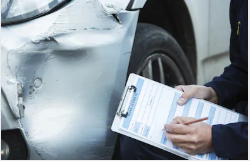
You just got into a car accident in Pueblo. You are safe, but your car is a mess. Your first instinct is to grab your phone and call your insurance company or agent.
Wait.
Depending on who was at fault—and exactly how much insurance they carry—making that call could be a costly mistake.
At Innov8 Paint & Body, we are the Collision Repair & Insurance Claim experts in Pueblo West. We don't just fix cars; we help you navigate the confusing world of insurance statutes and coverage limits so you don't leave thousands of dollars on the table.
One of the most common questions we get is: "Whose insurance should I file the claim with? Mine (first-party) or theirs (third-party)?"
The answer depends on many factors most drivers are unaware of including liability limits. Here is the breakdown of the pros and cons under Colorado Law.
Option 1: Filing a "Third-Party" Claim
(Filing against the At-Fault Driver’s Insurance)
If the accident was clearly the other driver's fault (e.g., you were rear-ended), this is often your best financial option—BUT only if they have enough coverage.

✅ The Pros (The "Hidden" Money & Clean Record)
Your "Loss Runs" Stay Clean: When you file against their insurance, the loss is recorded on their record. It does not appear as a "chargeable loss" on your policy, preventing rate hikes.
$0 Deductible: You pay nothing out of pocket.
"Loss of Use" Rights: In the insurance industry, the goal is to make you 'whole' again. This means the at-fault insurance must pay for a rental car similar to your own vehicle.
Diminished Value Claims: Even after your car is fixed, it is worth less because of the accident history. You generally CAN claim diminished value from the at-fault driver to recover that lost market value.
❌ The Cons (The "$15,000 Trap" & Delays)
The State Limit Risk (The Big One): Under C.R.S. § 42-7-103, Colorado drivers are only required to carry $15,000 in Property Damage liability.
If your repair bill is $25,000 (common for modern trucks/SUVs) but the other driver has a personal auto policy with state minimums, their insurance will write you a check for $15,000 and close the file. You are personally responsible for the remaining $10,000. If you are hit by a commercial vehicle (delivery van, work truck), they typically carry $1,000,000+ in coverage. Filing third-party against a business is usually safe; filing against an individual is a gamble.
The "Investigation" Delay: Under C.R.S. § 10-3-1104, insurers have to investigate "reasonably." This allows them to stall while contacting their driver. If their driver ghosts them, they might deny coverage entirely.
No "Appraisal Clause": If you disagree with their offer on your car's total loss value, you have no contractual right to demand an independent appraisal. You often have to accept their offer or consider taking legal action.
The "Pro Rata" Risk (Multi-Vehicle Accidents):
Colorado's liability limits are per accident, not per car. If the at-fault driver hits you and another vehicle (or a fence/pole), their liability limit is split between everyone. If the total damage to all cars is $30,000, but the driver only has $15,000 in liability coverage, you might only get a check for $7,500 (50%). You are permanently out the rest unless you have your own coverage.
Option 2: Filing a "First-Party" Claim
(Filing with Your Own Insurance)
This is when you call your own agent and use your collision coverage. Your insurance pays to fix your car, and if the accident is not your fault, then they go after the other driver (this is called subrogation).

✅ The Pros (Total Protection & Speed)
Limits Don't Matter: Your collision policy covers the cost to repair your vehicle (minus deductible) regardless of the other driver's limits. If the repair is $40,000 and the other driver only has the $15,000 state minimum, your insurance pays the full $40,000 to fix your car and deals with the loss themselves. You are never left holding the bag.
The "Appraisal Clause" (Your Secret Weapon): If your insurance company says your totaled car is worth $20,000, but you know it's worth $25,000, you have a contract right to hire an independent appraiser to force a fair price. Not all insurance companies offer this in their policies, so be sure to check yours or ask your agent.
Speed: Your insurer has a contract with you. They fix the car first and argue about liability later.
❌ The Cons (The Record Hit & Lost Value)
The "Loss Run" Hit: Even if you are 0% at fault, opening a claim on your own policy generates a "file" on your permanent insurance record (CLUE report). While Colorado law limits rate hikes for not-at-fault accidents, having multiple frequency claims can mark you as high risk, potentially causing non-renewal or higher premiums later.
No Diminished Value: Standard auto policies in Colorado exclude coverage for diminished value. You get the car fixed, but you lose the resale value forever.
Limited Rental: You only get a rental car if you pay extra for rental reimbursement, and it is usually capped at a low daily rate (e.g., $30/day) or has a limit to how many days you can rent.
The "ISO ClaimSearch" Secret
Here is what most insurance companies won't tell you: Insurance companies share a massive fraud-prevention database called ISO ClaimSearch.
Third-Party Claim: A record is created in the ISO database under the other driver's policy. It puts the "black mark" on them.
First-Party Claim: That record is attached directly to your policy history. Even if your insurance recovers the money later, that file remains on your history for 3-5 years.
So, What Should You Do?
Every crash is unique. There is a lot to consider. Determining
policy limits and the amount of damage to your vehicle is a starting point.
Choose Third-Party (Them) IF: The other driver is a commercial vehicle (high limits) or has a limit that will cover your vehicle's repairs, accepts fault, and you want to claim diminished value.
Choose First-Party (You) IF: The other driver is a personal vehicle that might have $15k Limits, is uninsured, or you are fighting a total loss value and need to use the appraisal clause.
Still confused? Don't guess.
Call Innov8 Paint & Body before you call any insurance company. When you bring your vehicle to us, we can review the accident details and help you decide on the path that may be the better option for your situation.
SOURCES
Colorado Revised Statute § 42-7-103(14): Colorado Financial Responsibility Law (State Minimum Limits).
Colorado Revised Statute § 10-3-1104: Unfair Claims Settlement Practices Act.
Hyden v. Farmers Insurance Exchange (Colorado Court of Appeals): Legal precedent for Diminished Value entitlement.
Colorado Jury Instructions 6:13: Entitlement to Loss of Use (Rental Value) damages.
ISO ClaimSearch Database: Industry standard database for claim reporting and history.
Standard Insurance Policy "Appraisal Clause": Contractual right to dispute vehicle valuation.
Disclaimer: Innov8 Paint & Body is an expert in collision repair, not a law firm.
The information provided in this article is for educational purposes only and based on Colorado insurance industry standards. It does not constitute legal advice. If you have specific legal questions regarding coverage denial, liability, or statutes, please consult with a licensed Colorado attorney.

Comments